


Super Bear Adventure
Earthkwak Games
Super Bear Adventure is the kind of mobile game I can open for a few minutes and then unexpectedly keep playing because there is always another corner to investigate. Developed by Earthkwak Games, it is a free adventure game built around exploring large 3D worlds with a playful, sandbox-like feel. The main appeal is not a complicated story or a long list of systems; it is the simple pleasure of moving through colorful spaces, finding things, and deciding what to do next.
I approached it as a casual player rather than someone looking for a demanding console-style experience, and that made its strengths clear quite quickly. The controls and presentation are approachable, while the open areas give the game more room to breathe than a strictly linear platform adventure. It is suitable for Everyone, which also makes it easier to recommend as a light game for families or younger players, although adults who enjoy relaxed exploration can find plenty to like too.
Exploring the world at your own pace
The first thing that stands out is the sense of freedom. Instead of pushing me through a narrow sequence of stages, the game encourages me to look around and interact with the environment. That changes the rhythm considerably. I am not only trying to reach the next checkpoint; I am also checking paths that seem slightly out of the way, looking over platforms, and wondering whether a visible object is part of a challenge or simply an invitation to explore.
That structure works especially well on a phone because it supports short sessions without making every session feel identical. If I have only a few minutes, I can make progress through a small objective or investigate one nearby area. When I have more time, I can settle into a longer wander and let curiosity guide me. This flexibility is one of the strongest reasons I would choose it over a purely level-based mobile platformer.
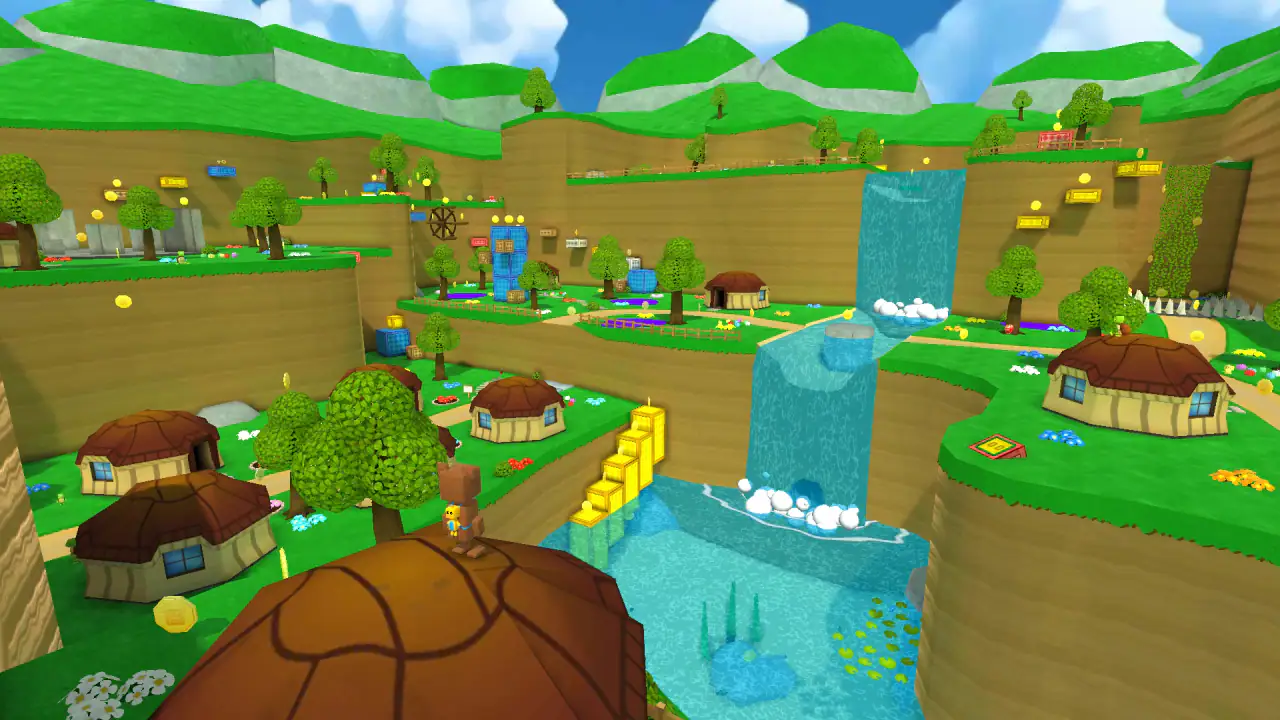
The 3D presentation gives the environments a stronger sense of place than a flat side-scrolling design. At the same time, the cheerful style keeps the experience friendly rather than intimidating. The result feels more like a playful digital playground than a serious action game. That distinction matters: I would not install this expecting intense combat, realistic visuals, or a story-heavy adventure. I would install it for movement, discovery, and the satisfaction of gradually becoming familiar with its spaces.
Related News

Why WhatsApp Messenger Still Makes Everyday Communication Feel Easy

Jurassic World: The Game Is the Better Dino Tycoon for Strategic Players

Threads in Real Life: Who Should Join, Lurk, or Leave

How SHEIN Turned Shopping Into an Endless Content Feed

How to Make Fortnite Feel Smarter on Mobile

Should You Switch to Microsoft Outlook on Mobile?
There is also a useful psychological difference between searching and simply collecting. When I explore without following a strict route, I pay more attention to the shape of the world. A high ledge, a gap, or a suspiciously open patch can become a small question to solve. My practical tip is to avoid rushing directly toward the most obvious objective on the first visit to an area. A slow first pass often makes later movement easier because I know where the safer routes and useful landmarks are.
Why the free entry point matters
The game is free to download and play, so the initial decision is straightforward: there is no purchase price required before I can find out whether its style suits me. That is meaningful value for a mobile adventure, particularly when I am unsure whether I will enjoy a slower, exploration-focused format. I can try the movement, camera, world design, and general pacing before deciding whether it deserves a regular place on my device.
In-app purchases are listed at $1.99 to $4.99 per item. I treat that as an optional spending range rather than part of the basic cost. The important distinction is that the free access lets me evaluate the core experience first, while any paid item becomes a personal choice instead of an entry requirement. I would be comfortable recommending the game to someone who wants to spend nothing, provided they are happy to ignore optional purchases and focus on what is available without paying.
Gallery
That also makes it easier to recommend for a shared family device. A parent can let a child try the game without committing to a paid download, then decide whether in-app purchases should be allowed on the device. I would still keep purchase controls in mind, as I would with any free game that offers paid items. The sensible workflow is to play first, judge the free experience on its own, and only spend when the benefit is clear to the person actually playing.
I would not describe the purchase range as a reason to buy the game. The verified value proposition is the free experience; the paid items are an additional option. That is an important difference from a premium game where the upfront price is the main exchange for the complete product. Here, the right question is not “Is the game worth the price?” because the basic download is free. The better question is “Do I enjoy the free version enough to consider optional spending?”
Small habits that make exploration better
One useful habit is to learn an area in layers. On my first pass, I focus on orientation rather than completion: I identify the main route, note unusual structures, and test how easily I can return to familiar ground. On a second pass, I look for side paths and higher platforms. This prevents the common mobile-game frustration of wandering randomly and assuming that every missed item requires a complete restart.
I also recommend treating the camera as part of the challenge rather than fighting it. In a 3D adventure, a poor viewing angle can make a simple jump or route look confusing. Before moving toward a narrow platform, I take a moment to adjust my view and check the landing area. That small pause is more reliable than repeated attempts made from an awkward angle, especially when playing on a smaller phone screen.
Another practical approach is to use short sessions for scouting and longer sessions for completion. A quick session is ideal for learning where an objective sits or testing a route. When I return with a clearer plan, I spend less time circling the same area. This is a better fit for the game than expecting every launch to deliver a dramatic event immediately.
These habits reveal one of the game’s less obvious strengths: it rewards attention more than speed. Players who enjoy noticing environmental clues and remembering routes will probably get more from it than players who want constant action. The game’s broad spaces are not just decoration; they shape how I make decisions and how much I remember from one visit to the next.
Where the experience can feel limited
The same freedom that makes the game appealing can also create friction. When I want a clearly signposted objective every minute, open exploration can feel less efficient. There may be moments when I know I am supposed to investigate but do not immediately understand which direction is most productive. That is not necessarily a flaw for an exploration game, but it does mean the experience depends on patience.
Mobile controls are another trade-off. Touch input is convenient, yet it does not always provide the precision of a physical controller. Careful movement can demand more concentration than the cheerful presentation suggests. If I am playing while distracted, on a crowded commute, or with the phone held awkwardly, small navigation mistakes become more likely. I would choose a more direct, level-based game when I want instant accuracy and minimal camera management.
The game’s relaxed tone may also be a weakness for players who need strong stakes. Its appeal comes from exploring and playing around in the environment, not from delivering a tense, cinematic campaign. Someone looking for deep character development, a demanding combat system, or a competitive multiplayer loop should probably look elsewhere. Super Bear Adventure is better understood as a playful sandbox adventure than as a replacement for a large console action title.
There is a further trade-off in the free-to-play structure. Free access lowers the barrier to entry, but optional purchases can make the experience feel different from a one-time premium game. Players who prefer paying once and receiving a clearly defined package may find that model more comfortable elsewhere. I appreciate being able to start without paying, but I also think users should decide in advance whether they are willing to ignore optional items or set a firm spending limit.
Who will get the most from it?
I think the best audience is someone who enjoys gentle discovery. If you like walking through a game world, testing unusual routes, and finding satisfaction in gradual familiarity, this is a strong candidate. It is also a good fit for players who want an adventure they can sample in short bursts rather than a game that demands a long uninterrupted session.
For younger players, the Everyone rating and friendly style make the game approachable. For adults, the appeal depends on whether the simple presentation matches their taste. I would recommend it to a friend who wants something cheerful after work, especially if that friend enjoys platforming but does not want punishing difficulty every time they play.
A realistic everyday scenario would be a ten-minute break between errands. I could open the game, revisit a familiar world, choose one nearby area to inspect, and stop after making a little progress. The open design gives that short session a sense of purpose without requiring me to remember a complicated plot. On a quiet evening, I could instead spend longer comparing routes and returning to places that looked interesting earlier.
It is less suitable for a player who wants a tightly structured campaign with constant forward momentum. It is also not my first choice for someone who values competitive play, realistic graphics, or advanced combat above exploration. In those cases, a premium platform adventure or a more focused action game would probably deliver a better match, even if it costs money up front.
How it compares with familiar mobile alternatives
Compared with a conventional platformer built from separate stages, this game gives me more reason to revisit the same spaces. A stage-based alternative is usually better when I want a clear beginning and end, quick retries, and measurable challenge. Super Bear Adventure is better when I want the environment itself to be the main source of interest.
Compared with a story-led adventure, it feels lighter and less demanding. A narrative game may offer stronger character motivation and more dramatic progression, while this one leaves more room for personal wandering. I would choose the story-led option for an evening when I want to be guided; I would choose this one when I want to decide what deserves my attention.
Compared with a premium mobile game, the free entry point is its clearest advantage. I can test it without paying, which is valuable when I am browsing casually. The trade-off is that players who prefer a single purchase and a tightly controlled experience may feel more comfortable with a paid alternative. Neither model is automatically better; the choice depends on whether flexibility or certainty matters more to me.
The game also occupies a useful middle ground between a toy-like sandbox and a traditional adventure. It has enough structure to give exploration direction, but it does not feel as rigid as a checklist of isolated levels. That balance is why I would recommend trying it even to someone who normally avoids mobile platform games, as long as they are open to a slower pace.
Performance expectations and practical setup
The current version is 12.1.3, and the minimum operating system is Android 6.0. That makes the compatibility requirement relatively approachable for many Android users, although the actual comfort of play will still depend on the phone’s age, screen size, and touch response. I would install it on the device I plan to use regularly and spend a few minutes checking whether the controls feel comfortable before investing serious time.
Because the game uses 3D environments, I would also avoid judging it during a moment when the phone is already struggling with many background tasks. Closing unnecessary apps can make a casual session feel less interrupted, particularly on older hardware. This is not a promise of identical performance across every device; it is simply a sensible way to give the game a fair test.
The large audience suggests that the concept has broad appeal: it has a 4.5 average from around 825 thousand ratings and has passed 100 million installs. Those figures do not replace personal testing, but they do show that the game has reached far beyond a small niche. I see that as a useful signal for someone who wants a well-established mobile adventure rather than an obscure experiment.
It has also accumulated around 8.3 thousand written reviews, which means prospective players can find plenty of public discussion around the experience. I would still read comments with care, because opinions about controls, pacing, and optional purchases often vary according to age, device, and play style. The most relevant question is whether the reviewer wanted exploration or a faster, more structured game.
My recommendation after playing
My overall view is positive because the game understands what makes a mobile adventure relaxing. It gives me a world to investigate without demanding that every session become a major commitment. The colorful 3D spaces, free entry, and flexible pacing work together well, and the Everyone rating broadens its appeal without making it feel exclusively aimed at children.
Still, I would not recommend it blindly. If you dislike touch-based movement, become frustrated when objectives are not immediately obvious, or want a premium experience with no optional spending model, there are better alternatives. The game’s charm depends on accepting a little wandering and treating discovery as the reward rather than merely a delay before the next challenge.
For me, the best value comes from downloading it for free, testing the controls, and giving the exploration style a fair session before making any decision about purchases. The optional items range from $1.99 to $4.99 each, so I would keep spending separate from my judgment of the core game. If the free content already gives me enjoyable reasons to return, the download has done its job without requiring payment.
My verdict: try it if you want a free, friendly 3D adventure built around wandering and discovery. I would recommend it to families, casual players, and anyone who likes finding their own route through a game world. I would skip it in favor of a more focused alternative if I wanted intense action, a tightly scripted story, or precise controller-style platforming. For the right player, Super Bear Adventure is an easy game to keep installed because even a short visit can feel like a small expedition.
FAQs for Super Bear Adventure
What is Super Bear Adventure about?
Super Bear Adventure is a 3D platformer game where players control a bear on a mission to save his friends and explore various whimsical worlds. The game features open-world environments filled with secrets, treasures, and engaging puzzles, offering a nostalgic experience reminiscent of classic platform games.
Is Super Bear Adventure suitable for all ages?
Yes, Super Bear Adventure is designed to be family-friendly and is suitable for players of all ages. Its colorful graphics, simple controls, and non-violent gameplay make it an ideal choice for both children and adults looking for a fun and relaxing gaming experience.
What are the system requirements for Super Bear Adventure?
Super Bear Adventure is available on both Android and iOS platforms. It requires a device running Android 4.4 or later, or iOS 9.0 or later. The game is optimized to run smoothly on most modern smartphones and tablets, ensuring a seamless gaming experience.
Does Super Bear Adventure have in-app purchases?
Yes, Super Bear Adventure includes optional in-app purchases. While the game is free to download and play, players can purchase cosmetic items or additional features to enhance their gameplay experience. However, these purchases are not necessary to enjoy the full content of the game.
Can Super Bear Adventure be played offline?
Yes, Super Bear Adventure can be enjoyed offline, making it a great option for players who want to play without an internet connection. This feature allows for uninterrupted gameplay, whether you're on the go or in an area with limited connectivity.
Pros
- Engaging open-world gameplay.
- Charming and colorful graphics.
- Simple controls for easy play.
- Free to play with optional purchases.
- Regular updates with new content.
Cons
- In-app ads can be intrusive.
- Occasional bugs and glitches.
- Limited character customization.
- Requires internet for some features.
- Can be repetitive over time.


